Dazzling Districts to Breathtaking Bluffs

16 Mar 2026
News, Whitepapers
Tourism-Led Economic Development as Strategy in Taney County, Missouri
For Taney County, where Branson already functions as a regional anchor for visitor activity, the economic value of tourism is well recognized. However, tourism promotion is often framed narrowly—as a service industry or marketing function—rather than as a core economic development strategy. When approached deliberately, tourism operates as a legitimate mechanism for generating outside spending, supporting local enterprises, and stabilizing employment across a wide range of sectors relevant to a mixed rural–small urban county like Taney.
National data underscores tourism’s role as a foundational economic contributor. According to research on integrating tourism into economic development, in the United States, tourism generates approximately $1.9 trillion in economic output, supports 9.5 million jobs, and accounts for roughly 2.9 percent of national gross domestic product. Leisure travel alone represents approximately 80 percent of tourism revenue, reflecting sustained demand for place-based experiences even outside major metropolitan markets. These dynamics help explain why tourism has increasingly been integrated into formal economic development strategies at the state and local levels.
From an economic development perspective, tourism functions similarly to an export activity: visitors bring external dollars into the local economy, which are then circulated through lodging, food service, retail, transportation, recreation, and supporting services. Unlike many traditional export industries, tourism does not require large-scale industrial infrastructure; instead, it leverages existing assets—natural amenities, cultural resources, and community-scale businesses—making it particularly relevant for counties with geographic or structural limits on industrial recruitment.
For Taney County, where a key objective is extending the benefits of the visitor economy beyond the Branson hub, nature-based tourism is particularly effective. Research on nature-based tourism shows that each additional dollar of tourist spending in nature-centric areas can generate between $1.53 and $1.83 in real income gains as that spending flows through the community. These spillover benefits support small businesses, strengthen household incomes, and help sustain services used by residents and visitors alike.
Crucially, tourism does not need to look the same in every community to deliver value. Different places can engage tourism in ways that fit their assets—whether as entertainment centers, outdoor gateways, cultural destinations, or complementary service hubs. This flexibility is a strength. By recognizing tourism promotion as a foundational economic development strategy, Taney County demonstrates how tailored tourism approaches support communities.
Tourism Across Taney County
While Branson acts as the gravitational center of Taney County’s visitor economy, the region is far from a monolith. Beyond the neon lights of Branson’s Entertainment District lies a diverse constellation of communities, each operating at a different stage of tourism maturity. A closer look at these communities makes it clear that a one-size-fits-all approach to tourism development will not work. Instead, Taney County’s tourism landscape reflects three broad tiers of readiness, shaped by varying assets, capacities, and constraints across the county.
Established Tourism Destinations
Taney County’s established tourism destinations are communities where tourism is already a thriving, visible economic force, supported by cohesive clusters of lodging, attractions, dining, and visitor services. These places function as destinations in their own right, with recognizable identities and sustained, multi-seasonal demand.
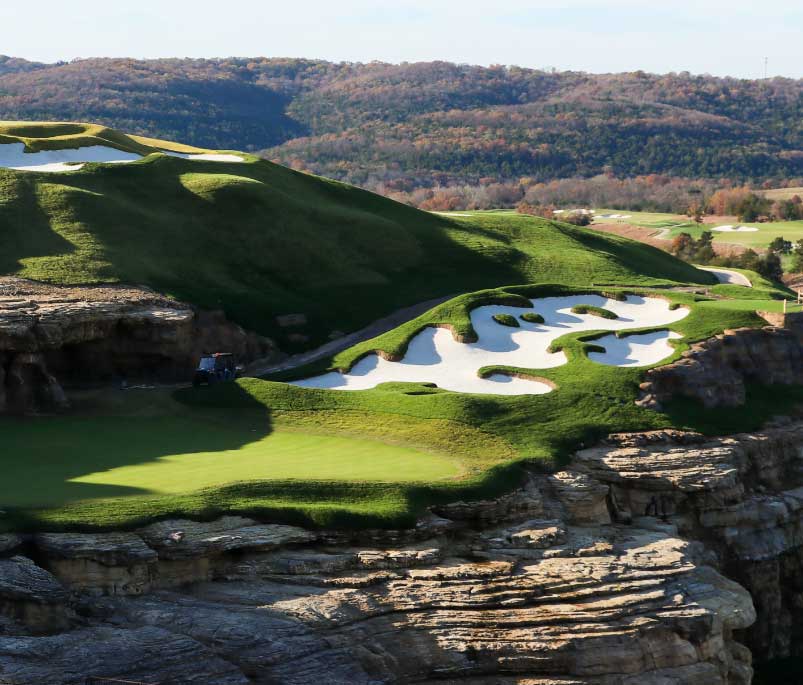
Hollister exemplifies this condition through its English Village–style streetscape, walkable historic core, and integrated mix of lodging, dining, and entertainment. It offers visitors a polished, small-town experience that complements Branson while remaining firmly embedded in the regional tourism economy. Ridgedale represents a different but equally mature destination model. It is anchored by world-class golf courses, such as Big Cedar, which USA Today named as both the number-one golf resort and Holiday Hotel of 2025.
In eastern Taney County, Protem stands out as a smaller but clearly defined destination node. With multiple family-owned resorts, a public campground and marina, and recognition tied to Bull Shoals Lake, Protem has achieved destination status despite its rural scale. Its tourism economy is visible, intentional, and distinct from surrounding communities.
Across these communities, tourism is not incidental. It is a core economic driver that has already achieved destination recognition. The next step is not discovery, but growth—supporting reinvestment and attracting new capital to refresh existing offerings and sustain momentum.
Moderate and Niche Tourism Areas
A second set of communities occupies a middle ground in Taney County’s tourism landscape. In these places, the tourism sector is real and meaningful, but it does not yet operate as a fully realized destination with strong independent pull.
Rockaway Beach is the clearest example of a resurgent destination. Once a bustling lakefront resort town, it retains a recognizable tourism core and a nostalgic waterfront character while actively modernizing infrastructure and rebuilding market confidence. Tourism remains central to the community’s identity, but the destination is still in transition.
Forsyth, the county seat, captures significant visitor activity due to its proximity to Branson and location along key travel corridors. Lodging, dining, and recreation amenities benefit from this traffic, but tourism largely reflects spillover rather than intentional visitation, limiting Forsyth’s visibility as a destination in its own right.
Bradleyville reflects a more niche and understated tourism environment. With access to the Hercules Glades Wilderness and surrounding natural landscapes, it offers compelling outdoor recreation opportunities, yet remains defined by rural quiet rather than a market-ready tourism identity.
In these communities, tourism activity is real but constrained, requiring elevation in visibility, branding, and infrastructure so existing assets attract more intentional visitation and sustain commercial impact.
Emergent Passive Tourism Communities
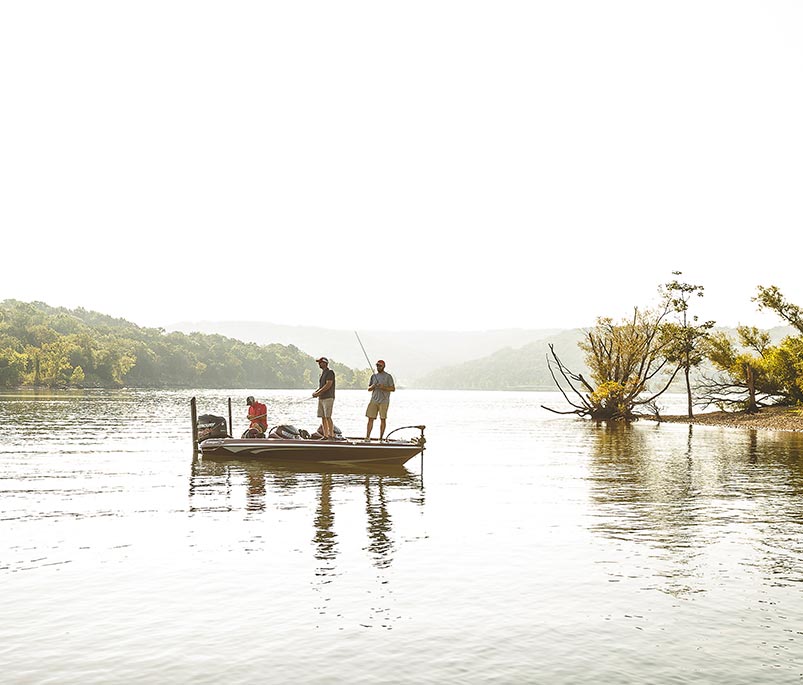
Taney County’s emergent passive tourism communities are largely rural places where visitors are already present, but tourism remains low-intensity and peripheral. Communities such as Kissee Mills and Bull Creek sit near creeks, conservation areas, and outdoor recreation landscapes that attract anglers, paddlers, and day visitors seeking quiet, nature-based experiences.
These places function primarily as access points rather than destinations. Visitor spending is modest, and amenities are limited, yet even small volumes of tourism can matter in rural contexts when they support locally owned businesses.
For these communities, progress depends on empowering local entrepreneurs to develop micro-tourism and agritourism ventures that monetize natural assets while preserving rural character, enabling participation in the visitor economy without pursuing destination-scale development.
Taken together, these tiers illustrate a tourism landscape that is already diverse, functional, and evolving. Recognizing how different communities participate in the visitor economy provides a clear foundation for aligning future investment and state support with the specific conditions present across Taney County.
State Support for Tourism-based Economic Development
Missouri has already established state-enabled mechanisms to support tourism-led economic development, most notably through the Branson/Lakes Area Tourism Community Enhancement District (TCED), a voter-approved district authorized under state statute to fund regional destination marketing. The TCED explicitly recognizes tourism as an economic development function, but intentionally limits revenues to promotion and visitor acquisition.
TCEDs function differently from mechanisms used in other states, such as Tennessee’s Tourism Development Zones (TDZs), which capture incremental tax growth within a defined area to service debt on large, capital-intensive visitor projects, such as arenas or convention centers. A different but equally distinct model can be seen in what may be described as Tourism Enterprise Zones (TEZs), such as Virginia’s Tourism Zones. TEZs function as enterprise-style incentive districts that reduce operating costs and regulatory friction for individual tourism-related businesses through locally granted tax abatements, fee reductions, and zoning or permitting flexibility. Although TCEDs, TDZs, and TEZs share similar terminology and a focus on tourism, they operate at fundamentally different layers of destination finance: TCEDs support ongoing destination marketing and demand generation, TDZs support the creation of major tourism assets through capital finance, and TEZs focus on improving the business environment for existing tourism enterprises. While these distinctions are important for understanding the full range of state-enabled tourism tools, TDZ- and TEZ-style mechanisms align most closely with large hubs or concentrated commercial districts and are not well suited to the smaller, dispersed tourism communities that are the focus of this analysis.
For Taney County’s established, secondary tourism destinations—such as Hollister, Ridgedale, and Protem—the most immediate gap in Missouri’s tourism toolkit is not awareness, but reinvestment capacity. These communities already function as destinations with identifiable visitor demand, yet they lack mechanisms that allow the tourism industry itself to collectively fund marketing enhancements or shared improvements without relying solely on municipal revenues. Tourism Improvement Districts (TIDs), where authorized, provide a way for lodging operators or attraction owners to self-assess fees for defined purposes, typically marketing or targeted capital projects that benefit the district as a whole. However, Missouri currently lacks enabling legislation for TIDs, a tool used in at least 19 other states to give tourism industries greater control over destination reinvestment. Because TIDs are initiated by industry and governed primarily by contributing businesses, authorizing their use in Missouri would create a complementary layer to public tools such as TCEDs and local tourism taxes—allowing public and private resources to be deployed in parallel rather than in competition, and giving established destinations greater autonomy to fund their own evolution without placing additional strain on municipal budgets.
Experience from other destinations demonstrates how industry-led tourism funding can expand, rather than simply redistribute, public resources. Cities such as San Diego have leveraged tourism marketing districts to allow the private sector to sustain destination promotion while freeing general tourism tax revenues for infrastructure and other public service needs. Applied to Taney County, a similar structure would enable established destinations to pursue industry-aligned Infrastructure improvements without diluting existing marketing funds. In places like Protem, this could include reinvestment in campgrounds or marina facilities that serve multiple operators, while in Hollister it could support enhancements to the historic core that reinforce its identity as a walkable destination. In this way, TIDs function as a bridge between mature destination marketing and the next phase of place-based reinvestment.
For moderate and niche communities like Rockaway Beach and Bradleyville, the primary barrier is physical capacity rather than destination potential. These towns require state support to rebuild and modernize the infrastructure that enables visitation, yet they often lack the institutional capacity to fully access existing programs. Many state tourism and marketing tools are mediated through certified destination marketing organizations (DMOs) or require sustained administrative effort, placing communities without a dedicated DMO or full-time staff at a structural disadvantage even when tourism activity is present. Addressing this gap does not require the creation of new programs so much as expanded technical assistance and clearer coordination between tourism-facing tools and infrastructure programs so that smaller communities can participate meaningfully in existing state initiatives.
Models from other states illustrate how targeted revenue and infrastructure strategies can support this next stage of development. The Wyoming "Penny Tax" model demonstrates how dedicating specific revenue streams to visitor-facing infrastructure yields high returns for local communities. Missouri can mirror this success by expanding its Local Tourism Asset Development Grant program or utilizing Community Development Block Grants (CDBG) to prioritize dual-use assets—such as waterfront revitalization or trail connectivity—that serve both residents and visitors. Arkansas’s Natural State Initiative (NSI) offers another blueprint, utilizing "Opportunity Zones" within state parks to boost private investment in enhanced visitor experiences, a strategy that could revitalize public assets like Shadowrock Park.
At the rural end of the spectrum, for emergent areas like Kissee Mills and Bull Creek, the state’s role is to seed the “product.” Grant programs that fund “product development”—specifically for small-scale agritourism and micro-tourism ventures—are essential for diversifying the rural economy. By expanding programs like the Show-Me Entrepreneurial Grants for Agriculture (SEGA) to specifically target visitor-facing “agriexperiences” rather than just value-added commodities, the state can help rural landowners monetize their natural assets. This approach turns passive land ownership into active economic contribution, creating a “bottom-up” tourism economy that complements the “top-down” resorts of the established hubs.
This same distributed approach can extend to rural residential communities that are not organized around tourism as an economic identity, such as Merriam Woods, Taneyville, and Kirbyville. These communities do not function as destinations, nor are they structured around visitor-serving clusters. However, targeted support for small-scale agritourism and micro-enterprise activity can still provide supplemental household income, encourage local entrepreneurship, and incrementally connect residents to the broader regional visitor economy anchored in Branson. In this way, participation in tourism does not require destination status, but simply access to appropriate, right-sized tools.
Taney County Tourism: Place-based Export
Tourism is not merely a leisure activity; it is an atypical export—one in which consumers travel to the product rather than the product shipping to them—and, when aligned with the right tools, it can drive durable, place-based economic growth. Taney County’s experience shows that tourism-led development already occurs at multiple scales, from Branson’s mature entertainment economy to historic river towns, outdoor gateways, and rural landscapes, but that these places require different forms of support to convert visitation into sustained economic impact.
Shifting from a one-size-fits-all, single-destination approach requires a tiered tourism development framework. That policy must align with stages of market maturity, such as reinforcing destination marketing in established markets, enabling industry-led capital reinvestment in secondary destinations, expanding infrastructure access and technical assistance for moderate and niche markets, and supporting limited-scale product development in emerging rural communities. For Missouri, the priority is not to replicate external models, but to adapt and institutionalize best practices from peer destinations to modernize its tourism policy toolkit—ensuring program accessibility, complementarity, and alignment with community development stages. This approach positions tourism as an engine of sustained, place-based economic growth.
A modernized tourism policy toolkit, built on stage-appropriate resources across communities, enables Taney County to preserve economic returns generated by visitor activity while broadening and diversifying its economic base on a countywide scale. Contact Taney County Partnership today to be part of this strategy shaping our next era of growth!
More Topics